Design Your Own FPV Drone Frame, Made to Be Printed
Quads, cinewhoops, tricopters, hexa and octocopters from 65 mm whoops to 10-inch long range. The new drone frame generator shapes frames for plastic, not carbon, and shows them built before you print.
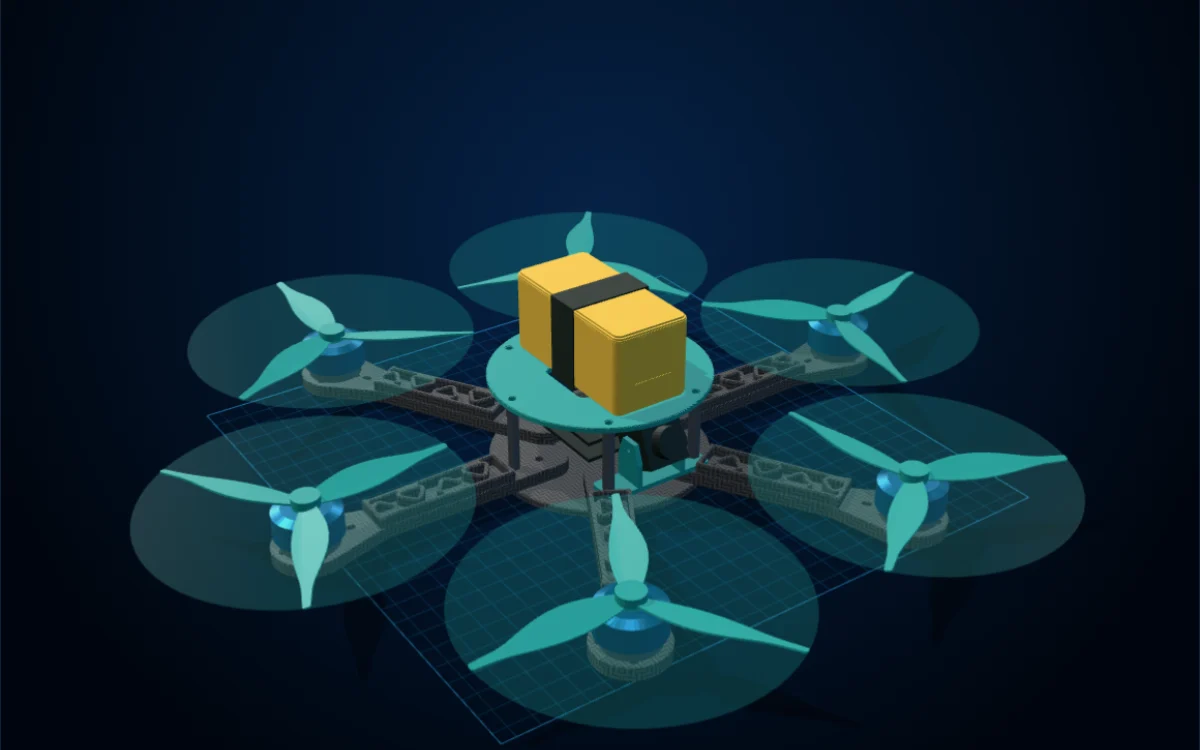
Most printable drone frames are carbon fibre designs cut from plastic instead. They look right, but plastic bends far more than carbon and cracks at sharp corners, so they flex in the air and snap on the first hard landing. The drone frame generator is built the other way round: every frame is shaped for printing, sized to your parts and checked before you download it.
It is free, it runs in your browser, and nothing is uploaded.
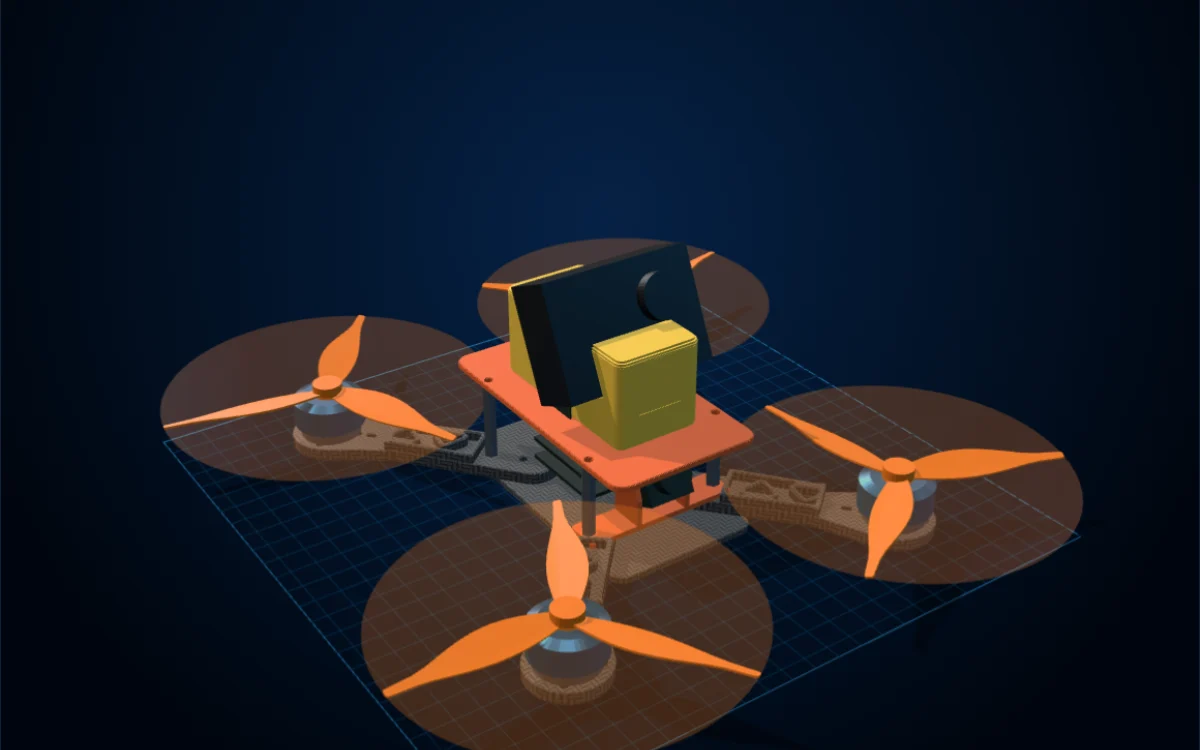
Every kind of aircraft
- Quadcopters in true X, stretched X, squashed X, H, plus and deadcat layouts, where the front arms sweep wide so the props stay out of the camera view.
- Cinewhoops with bell-mouthed ducts round every prop.
- X8 coaxial cinelifters, with a second motor under each arm.
- Tricopters with a tilting tail motor on a hinged mount, driven by a 9 g servo for yaw.
- Y6, hexacopters and octocopters for heavy lift and smooth footage.
Sizes run from 65 mm tiny whoops to 10-inch long range. Pick a size and the typical motors, flight stack, camera and standoffs fill in for you.
Made for plastic
This is what sets these frames apart. Two features are on for every frame:
- Rounded arm joints. Smooth fillets where each arm meets the body and the motor pad spread crash loads out, instead of focusing them on one sharp corner where a crack starts.
- Stiffening rims. A raised edge runs along each arm and round every weight-saving cutout, which turns the flat arm into a channel. The arms come out about two to three times stiffer for roughly a tenth more plastic, and the generator tells you the figure for your frame.
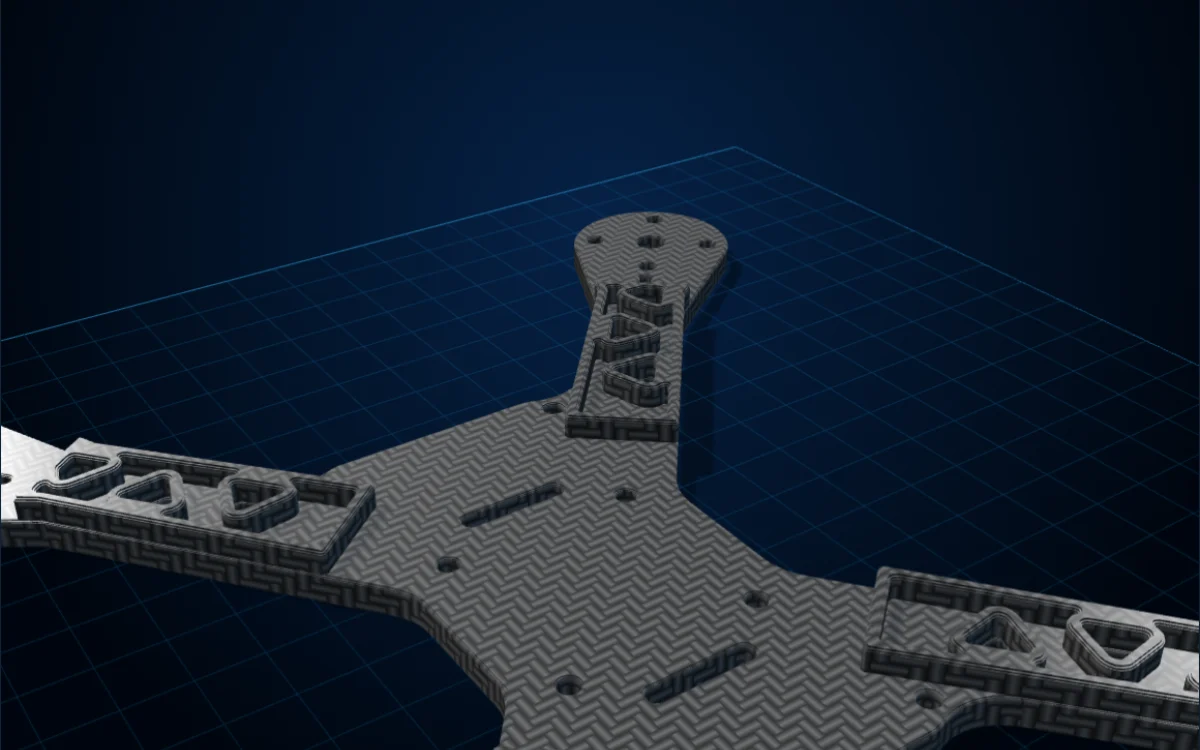
Arms can be straight, tapered, dogbone or flared, with round, square or teardrop motor pads and slots, round holes or truss cutouts. Or skip the settings: press Randomize frame for a new design from sixteen styles, from a slim race frame to a crash-proof basher with bumpers.
Bolt-on arms
Choose Bottom plate + replaceable arms and each arm becomes its own part, held by two M3 bolts. A crash costs you one arm instead of a whole frame, and big frames print a part at a time on a normal bed.
Sized to your parts
- Motor mounts for whoop motors, 9 × 9, 12 × 12, 16 × 16, 19 × 19 and 25 × 25 mm patterns, or your own.
- Flight stacks from 16 × 16 to 30.5 × 30.5 mm, square or turned 45°, with bigger holes for soft-mount grommets and a second mount for a VTX or receiver.
- FPV camera mounts for nano, micro and full-size cameras at any angle, with an optional bar over the top.
- Extras: battery strap slots, a rear tab for the battery lead, a GPS pad, a rear antenna mount and a GoPro-style action camera mount on the top plate or on the battery strap.
Checked before you print
The generator measures the gap between every pair of props and tells you the wheelbase you need if they get too close. It checks the camera fits between the plates at the angle you chose, warns when a strap is wider than the body and checks every part fits your printer's bed.
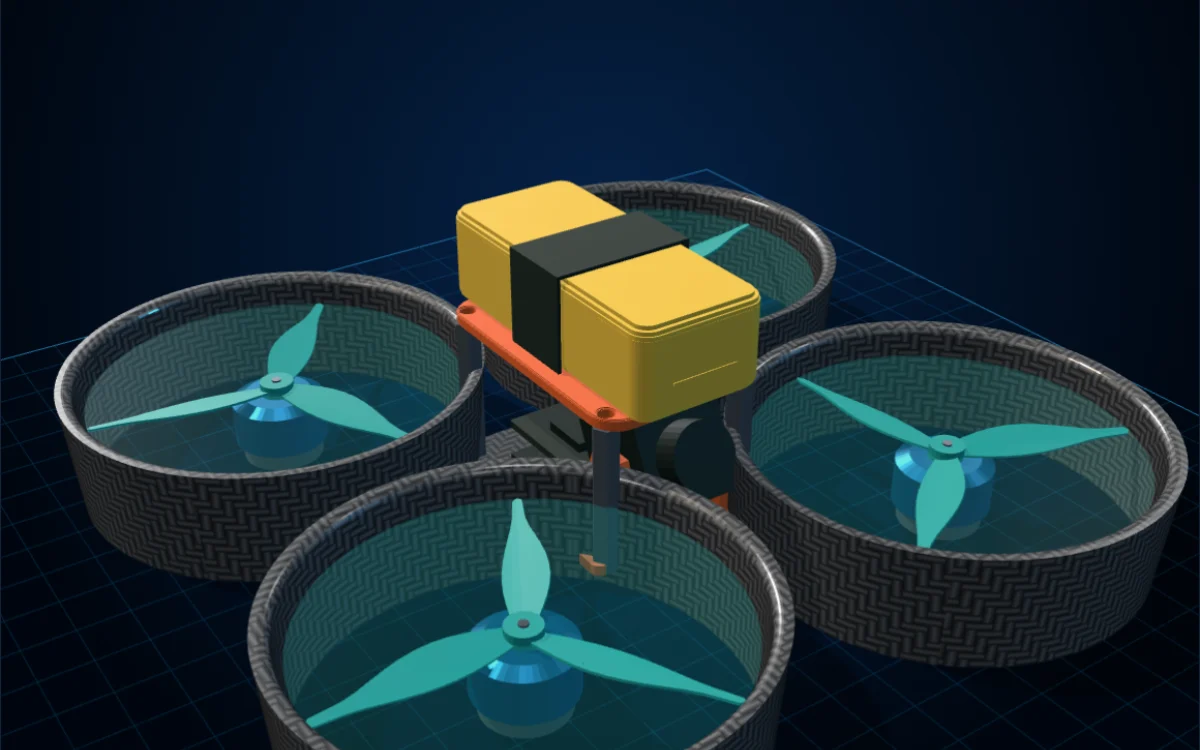
Tap the parts list to add the top plate, motors, props, battery and electronics to the preview and see the finished drone. Then switch to Print layout and download an STL, or a 3MF that keeps every part as its own object.
Print settings that work
Print flat, rims up, with 4 to 6 walls and 50 to 100% infill. PA-CF and PETG-CF make the best printed frames, PETG is a good start, and TPU is great for whoop ducts and camera mounts. Print a spare arm or two.
Ready to build? Open the drone frame generator.
Spotted something wrong, or have a fix that works better? Tell us at cobornassets@gmail.com — corrections get credited.